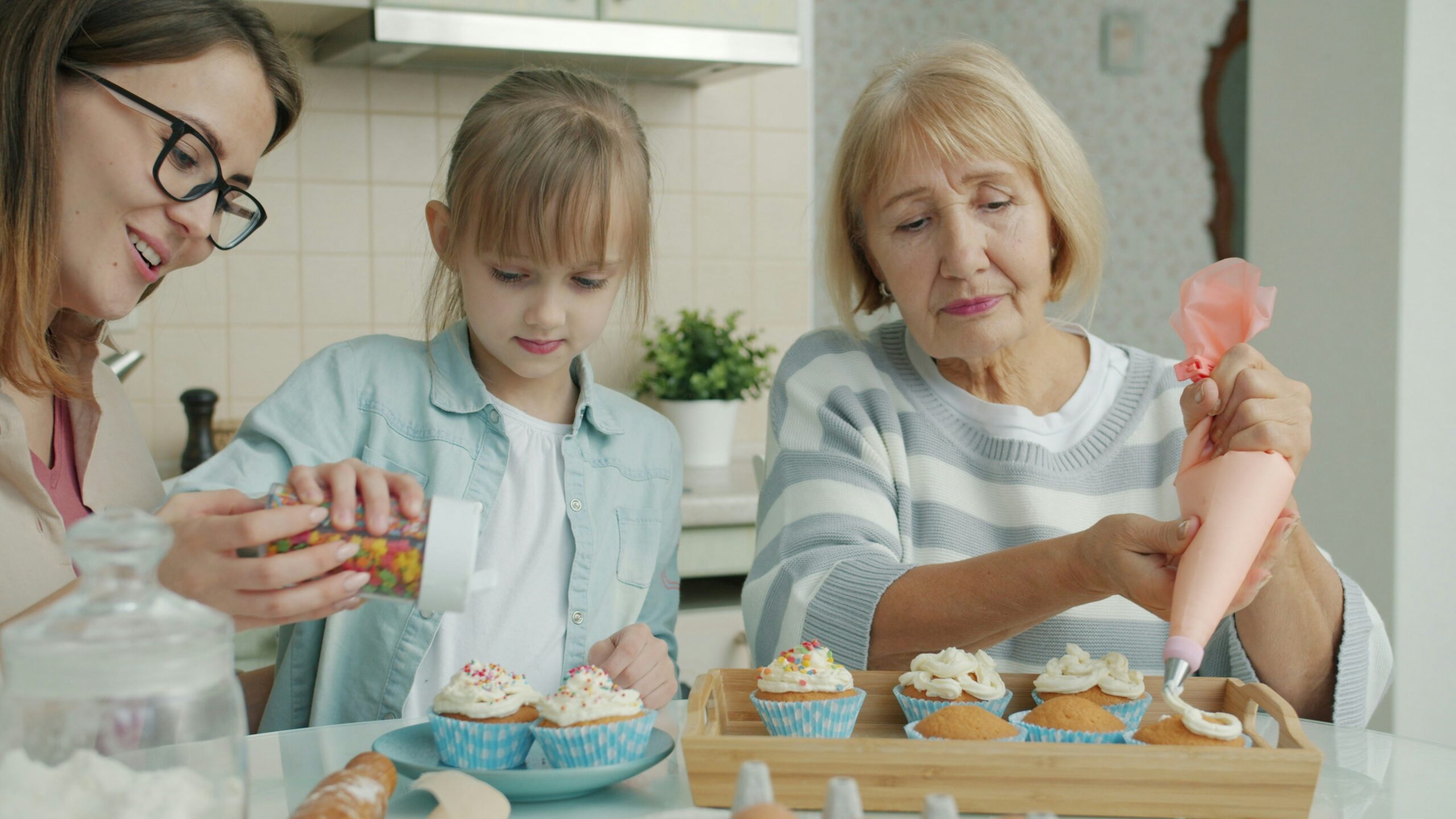
Food does more than satisfy hunger. It carries memories, values, stories, and skills from one generation to another. This power helps explain how food connects generations within families and communities worldwide. A familiar dish can remind grandparents of childhood while giving younger relatives a link to their roots. Family food traditions therefore become living records people can taste, practice, and pass on.
How Food Connects Generations Through Shared Experience
Recipes often become meeting points between age groups. A grandparent may teach a child how dough should feel instead of using exact measurements. They also learn patience, family language, humor, and the meaning behind certain ingredients. As a result, the kitchen becomes an informal classroom where cultural knowledge moves naturally between people.
Shared meals strengthen this process by creating repeated moments of connection. Families may gather for weekly dinners, religious holidays, birthdays, or seasonal celebrations. Each gathering reinforces familiar flavors and routines. However, these meals also create new memories around old traditions. That balance helps younger generations see heritage as something active rather than something locked in the past.
Traditional Recipes Preserve Family History
Traditional recipes can function like personal archives. They may reveal where a family lived, what ingredients were available, and how people adapted during difficult periods. For example, a simple soup might reflect years when households needed affordable, filling meals. Likewise, a festive dessert may show how families marked important events despite limited resources.
Written recipes capture only part of that history. Many important details live in gestures, timing, smell, texture, and personal judgment. Cooking beside an experienced relative can preserve knowledge a recipe card cannot explain. Younger cooks observe small decisions and ask questions in real time. In turn, elders get to explain why a dish matters, not just how to prepare it.
Cultural Food Traditions Build Identity
Food can give people a strong sense of belonging. This connection can become especially important when families move far from their place of origin. In a new environment, preparing traditional meals provides continuity. As a result, cultural food traditions can provide stability as people adjust to changing surroundings.
Children raised between cultures often experience this connection in distinctive ways. They may eat one type of food at school and another at home. At first, that difference can feel confusing or uncomfortable. Yet understanding the stories behind family dishes can turn difference into pride. Food then becomes a practical way to explore identity without reducing culture to abstract facts.
Cooking Together Transfers Skills and Values
Intergenerational cooking teaches practical abilities that extend beyond the kitchen. Younger family members learn planning, measurement, organization, safety, and resourcefulness. They also see how experienced cooks solve problems when ingredients are missing. Therefore, a cooking session can build confidence while preserving family recipes. These lessons become more memorable because they develop through participation rather than formal instruction.
Values also travel through everyday kitchen habits. A family that saves leftovers may communicate respect for resources. Another family may prepare extra portions for neighbors, showing generosity through action. Similarly, certain dishes may require several people to work together. In these moments, food traditions teach cooperation, responsibility, hospitality, and care without turning those values into lectures.
Adaptation Helps Keep Traditions Alive
Traditions survive when people can use them in real life. Strictly preserving every detail may sometimes make a dish difficult to continue. Ingredients change, families relocate, schedules become busier, and dietary needs evolve. For this reason, thoughtful adaptation can protect a tradition rather than weaken it. The core flavor, technique, story, or purpose can remain even when certain details change.
Younger cooks often play an important role in this adaptation. They may record a grandparent’s recipe, create clearer measurements, or substitute locally available ingredients. Thus, technology can support intergenerational cooking instead of replacing personal connection. What matters most is keeping knowledge understandable, usable, and meaningful.
Shared Meals Create Emotional Continuity
Food memories are often tied to people as strongly as to flavor. The smell of a familiar spice can recall a parent’s kitchen or a holiday gathering. Because sensory memories feel immediate, traditional dishes can maintain emotional bonds across time. They can even offer comfort after a loved one dies. Preparing that person’s recipe becomes a quiet form of remembrance.
Still, traditions gain strength when families explain their meaning. Children may enjoy a special meal without knowing why it appears each year. A short story about its origin can deepen the experience. Furthermore, inviting younger relatives to help prepare it gives them a sense of ownership. They become participants in family history rather than observers of a ritual designed by older generations.
Keeping Heritage Meaningful for the Next Generation
Keeping food traditions alive requires intention, but not perfection. Families can cook together regularly, share stories during meals, and document recipes before details disappear. More importantly, they can give younger people room to ask questions and contribute ideas. This approach respects heritage while allowing each generation to build a genuine relationship with it.
Ultimately, how food connects generations depends on repeated acts of sharing. Recipes carry knowledge, but people give that knowledge meaning through conversation, practice, and memory. When families prepare and eat meaningful dishes together, they preserve more than flavors. They preserve identity, relationships, and cultural heritage. In this way, the table becomes a bridge between inherited experience and the future.